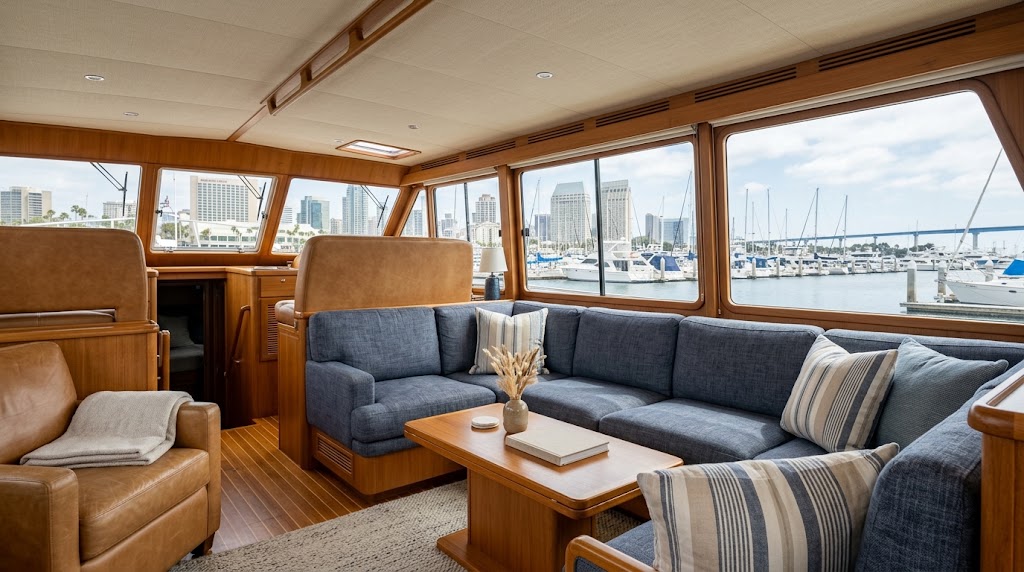
Yacht Interiors, Beyond the Gelcoat: A Cal Fire-Ready Approach to Fabric, Leather, and Headliner Care in Shelter Island and Harbor Island
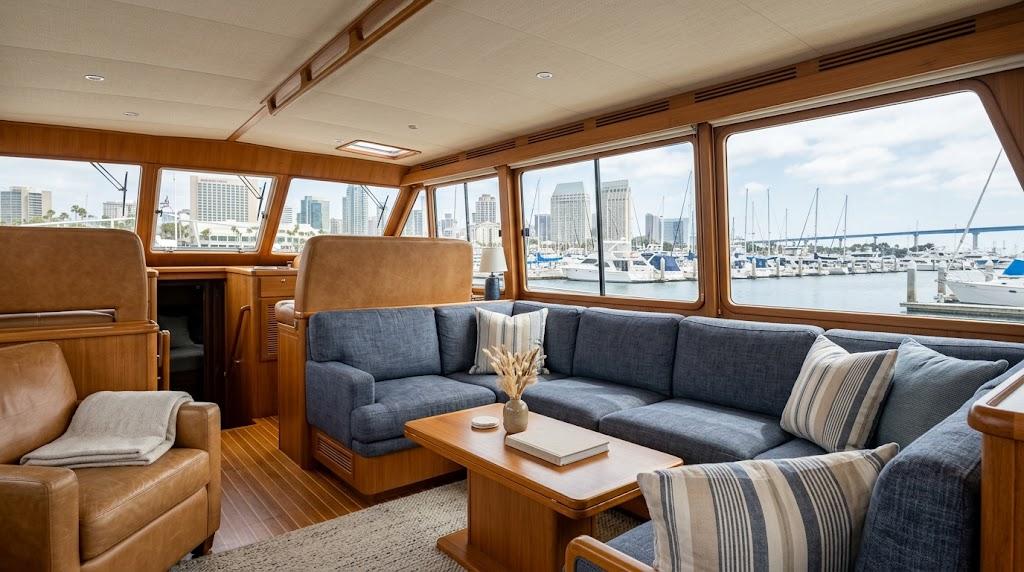
A yacht interior is not a living room that happens to float. Salt air, humidity, sunlight, body oils, spills, limited ventilation and constant use all work on the materials at once. A cleaning method that is harmless on a household sofa can leave a marine headliner sagging, a leather panel dry, or a fabric cushion carrying moisture deeper into the boat.
That is why yacht interior cleaning in San Diego needs to start with the material, the condition and the way the boat is used. Fabric, vinyl, leather, carpet, drapes and headliners each need a different decision about moisture, chemistry, agitation and drying. For owners and operators around Shelter Island and Harbor Island, the service also has to fit the practical reality of slip access, staging, ventilation and a defined working window. Pure Light's yacht cleaning service describes the dockside process and vessel-specific setup.
Yacht interior cleaning in San Diego: what “done right” means
Done-right yacht interior cleaning is a materials-first service that addresses upholstery, leather, carpet, headliners, drapes and odor together. It begins with identifying what can safely be cleaned, then selecting a method that removes soil without over-wetting, damaging finishes or hiding a condition that needs repair. The goal is a clean, dry and clearly documented interior, not simply a stronger fragrance after the appointment.
Marine interiors degrade differently from residential interiors. Salt carried in through the air and on clothing can remain in fibers and seams. UV exposure can fade fabric and dry leather. Humidity and restricted airflow can turn a small spill into a persistent odor, especially inside cabins, lockers and below-deck spaces.
Before an appointment, an owner, captain or yacht manager should identify:
the boat’s location and access requirements;
the materials involved, including fabric, vinyl, leather, carpet and headliner;
areas with staining, mildew odor, discoloration, cracking or sagging;
whether the boat will have power, ventilation and a usable drying window; and
whether any drapes or soft goods have a fire-retardant treatment or certificate history.
In Shelter Island and Harbor Island, those details matter because the work happens in a managed marine environment. Access, parking, dock rules and the time available at the slip should be confirmed before the cleaning day. No marina permission should be assumed from a service request alone.
Yacht upholstery: fabric, vinyl and leather need different methods
Fabric, vinyl and leather should not be cleaned as if they were interchangeable. Fabric may call for controlled extraction or a low-moisture method after testing. Vinyl may need careful soil removal around seams and texture. Leather generally needs measured cleaning followed by an appropriate conditioner, not saturation or a generic upholstery chemical.
The first decision is identification. A technician should inspect the material, look for manufacturer or care information where available, and test an inconspicuous area before committing to a full method. Testing helps reveal dye instability, finish transfer, browning risk, water marks, delamination or a coating that has already started to fail. Pure Light's commercial upholstery cleaning and protection service explains the extraction-versus-solvent decision in more detail. The upholstery cleaning and protection hub also includes leather reconditioning.
The working choice may include:
Fabric cushions: controlled moisture and extraction where the construction can tolerate it, with attention to seams, backing and drying time.
Marine vinyl: a compatible cleaner and gentle agitation that reaches textured grain without leaving residue or abrading the finish.
Leather upholstery: material-specific cleaning and conditioning, with restraint around dyed, coated, cracked or unfinished leather.
Boat carpet: soil removal that accounts for backing, adhesive, confined ventilation and the risk of leaving the carpet damp below deck.
There is no responsible universal promise that every mark will disappear. A stain may have changed the dye, UV may have permanently altered the color, and a mildew smell may be coming from damp backing, insulation or a leak rather than from the visible upholstery. A professional assessment should explain what cleaning can address and when the correct next step is repair, reupholstery, replacement or moisture control.
Yacht headliners and marine drapes: what can be cleaned, and what should not be forced
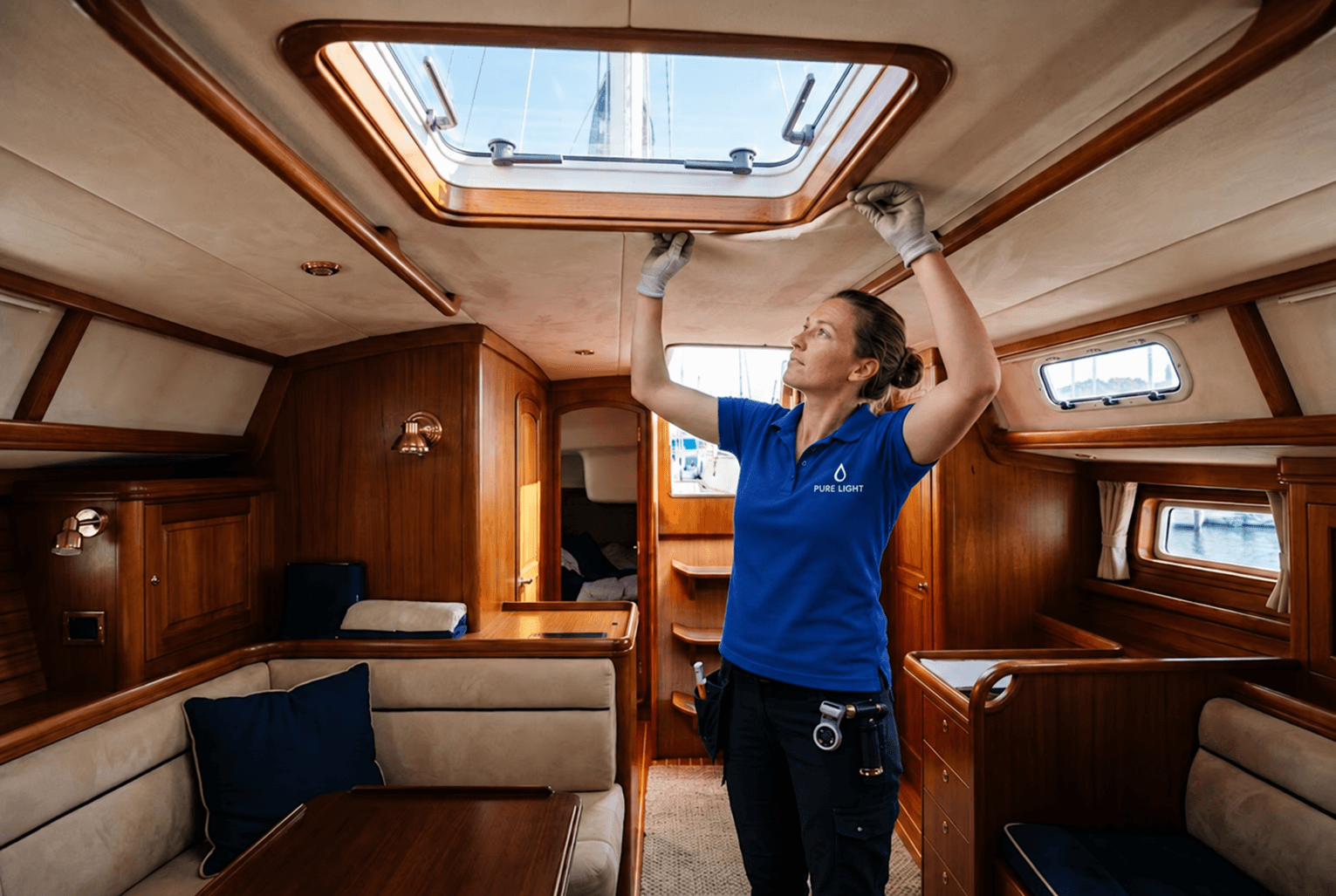
Headliners and marine drapes can sometimes be cleaned, but they should never be aggressively wet-cleaned without checking how they are attached and how they will dry. Staining and odor may be serviceable; sagging, delamination, weakened adhesive or deteriorated foam can indicate that cleaning alone will not restore the assembly.
Headliners are especially sensitive because moisture can affect the fabric, adhesive, foam and substrate at the same time. A safe inspection looks for:
sagging or bubbles in the headliner;
brittle, powdering or exposed foam;
water marks that trace a hatch, port or deck fitting;
mildew odor that returns after cleaning;
loose seams, edge lifting or adhesive failure; and
discoloration that may be fading rather than removable soil.
Marine drapes bring another question into the conversation: whether the soft good has a fire-retardant treatment requirement or documentation history. That is not something a cleaner should answer by guessing from the boat’s appearance. The owner or operator should identify the use of the vessel, the authority having jurisdiction and any existing specifications before treatment is proposed.
Owner preparation checklist
Remove valuables, loose personal items and anything that could be damaged by cleaning activity.
Photograph existing stains, tears, discoloration and headliner sagging before work begins.
Identify cabins or lockers with recurring odor, leaks or poor airflow.
Confirm access, parking, dock instructions, power and ventilation.
Provide any fabric-care labels, prior treatment records or fire-retardant certificates.
Keep the boat ventilated for the agreed drying period after service.
The compliance question: are marine drapes and headliners subject to California Title 19?
Not every private yacht interior is automatically subject to the same California flame-retardant requirements as a public venue. Title 19 and OSFM requirements become especially relevant when decorative fabrics are used in regulated occupancies or commercial settings such as dining, public assembly, schools, events or charter operations. The owner or operator should confirm the exact requirement with the authority having jurisdiction, or AHJ, before relying on a treatment or certificate.
The California Office of the State Fire Marshal explains that it issues registrations for approved flame-retardant chemicals, companies that apply them, nonflammable materials and fabrics treated with approved chemicals. OSFM also identifies authority over decorative materials and fabrics in drinking and dining establishments, places of public assembly and schools, where materials may be required to be nonflammable or treated with approved flame-retardant chemicals. Read the OSFM overview of flame-retardant chemicals and fabrics, then see Pure Light's flame-retardant and stage-drapery service for the company’s treatment and documentation workflow.
For a yacht, the relevant question is therefore not simply “Is this on a boat?” It is “How is this vessel being used, what fabric is being treated, and what does the AHJ or governing operation require?” A privately used vessel, a charter yacht carrying passengers, a yacht used for an event and a dining or hospitality operation may not present the same compliance context.
What a California Title 19 1321 certificate records
When a qualifying flame-retardant chemical application is performed by a registered flame-retardant application concern, California Code of Regulations, Title 19, 1321 requires an approved certificate of flame resistance to be furnished to the person or concern for whom the work was done. Copies must also be sent to the State Fire Marshal and the local fire authority within 10 days after the job is completed.
The certificate must be completed and signed by an authorized representative of the registered application concern. The regulation also calls for notation of the material and color and, for curtains or drapes, whether they are unlined, lined or lined and interlined. Where possible, the location and use of the treated articles should also be recorded. See the full text of California Code of Regulations, Title 19, 1321.
That certificate is documentation of the application. It is not a guarantee that an inspector, fire authority, vessel manager or charter client will accept every material for every use. The AHJ’s decision and the operating requirements still control.
Pure Light’s Cal Fire-ready differentiator
Pure Light Cleaning publicly lists Cal Fire / OSFM registration number GA1582 and describes its service standard as handled from the first conversation through follow-up. That registration is relevant when a project calls for a registered applicator and documentation, but it does not replace an AHJ’s determination or guarantee an inspection outcome. You can review the company’s gallery and customer reviews as additional trust signals.
The practical distinction is simple: a yacht owner or manager can discuss both surface care and compliance-related treatment with one provider, while keeping the regulatory decision with the appropriate authority. That is the standard a Cal Fire-ready process should support.
What to expect from a yacht interior service appointment
A well-scoped appointment should make the process predictable before anyone boards. The first step is an intake covering the vessel’s location, materials, problem areas, access, drying conditions and any compliance documentation. The cleaning plan should then identify the proposed method, the areas included, the expected drying window and any conditions that may need repair or replacement.
On the cleaning day, the team should protect adjacent finishes and work in a controlled sequence. Upholstery, carpet, leather, drapes and headliners should be handled according to their material and construction. Odor work should address the source where possible, not simply cover the cabin with fragrance.
After service, ventilation and drying are part of the job. The owner or operator should know when the interior can be closed up, when cushions can be returned to position and what conditions could cause the odor or staining to return.
For maintenance, a useful starting point is:
wipe salt and surface soil before it works into seams;
address spills quickly with the material-appropriate method;
keep cabins and lockers ventilated when the vessel is not in use;
investigate recurring mildew odor rather than repeatedly deodorizing it; and
schedule a professional deep clean before or after the busiest boating period, depending on use.
The right cadence depends on charter frequency, passenger volume, pets, cooking, exposure and ventilation. A heavily used charter boat may need a shorter interval than a privately used vessel that remains dry and well ventilated.
FAQ
Who does yacht interior cleaning in San Diego around Shelter Island and Harbor Island?
Pure Light Cleaning provides a materials-first conversation for yacht and boat interiors in San Diego, including upholstery, leather, carpet, drapes and headliner concerns. Slip access, parking, dock rules, power and the working window should be confirmed before an appointment, because marina-specific permission is not automatic.
Can yacht upholstery be cleaned without damaging fabric, vinyl or leather?
It can often be cleaned safely when the material and construction are identified first. Testing, controlled moisture, compatible chemistry and appropriate leather conditioning help reduce risk, but permanently faded, weakened or damaged material may need repair or replacement rather than more cleaning.
How do you clean a yacht headliner, and when should it be replaced instead?
A headliner should be inspected for sagging, delamination, weakened adhesive, deteriorated foam and the source of any water mark before a cleaning method is selected. Cleaning may address surface soil and some odor, but replacement or upholstery work may be the more honest recommendation when the assembly is failing.
Do yacht drapes or headliners ever need California Title 19 treatment?
They may, depending on the vessel’s use, the operating context and the AHJ’s requirements. Public assembly, dining, event and charter contexts deserve specific verification; a private yacht should not be assumed to have the same requirement as a regulated public venue.
What is a Title 19 1321 certificate?
It is an approved certificate of flame resistance associated with a qualifying application by a registered flame-retardant application concern. Under 1321, the certificate is furnished to the customer and copies are sent to the State Fire Marshal and local fire authority within 10 days after completion, with required details about the material and, for drapes, their lining configuration.
How do you remove mildew odor from a boat cabin safely?
Start by locating the moisture source and improving ventilation or dehumidification, then clean the affected material with a method it can tolerate. If the odor returns, the cause may be damp backing, insulation, a leak or a confined-space moisture problem rather than surface soil alone.
How often should yacht interiors be professionally cleaned in San Diego?
There is no single correct interval. Charter use, passenger traffic, cooking, pets, salt exposure, sunlight and ventilation determine whether a boat needs seasonal deep cleaning, more frequent maintenance or service only when a specific problem appears.
Talk to our Front Desk
If your yacht interior needs more than a generic wipe-down, start with the materials, the problem areas and the way the boat is used. Pure Light can help scope the cleaning, restoration or flame-retardant documentation conversation and identify what needs to be confirmed with the AHJ.