
The credentials behind the standard.
700+ five-star Google reviews
Cal Fire / OSFM registered · Licensed and fully insured · 15+ years in San Diego


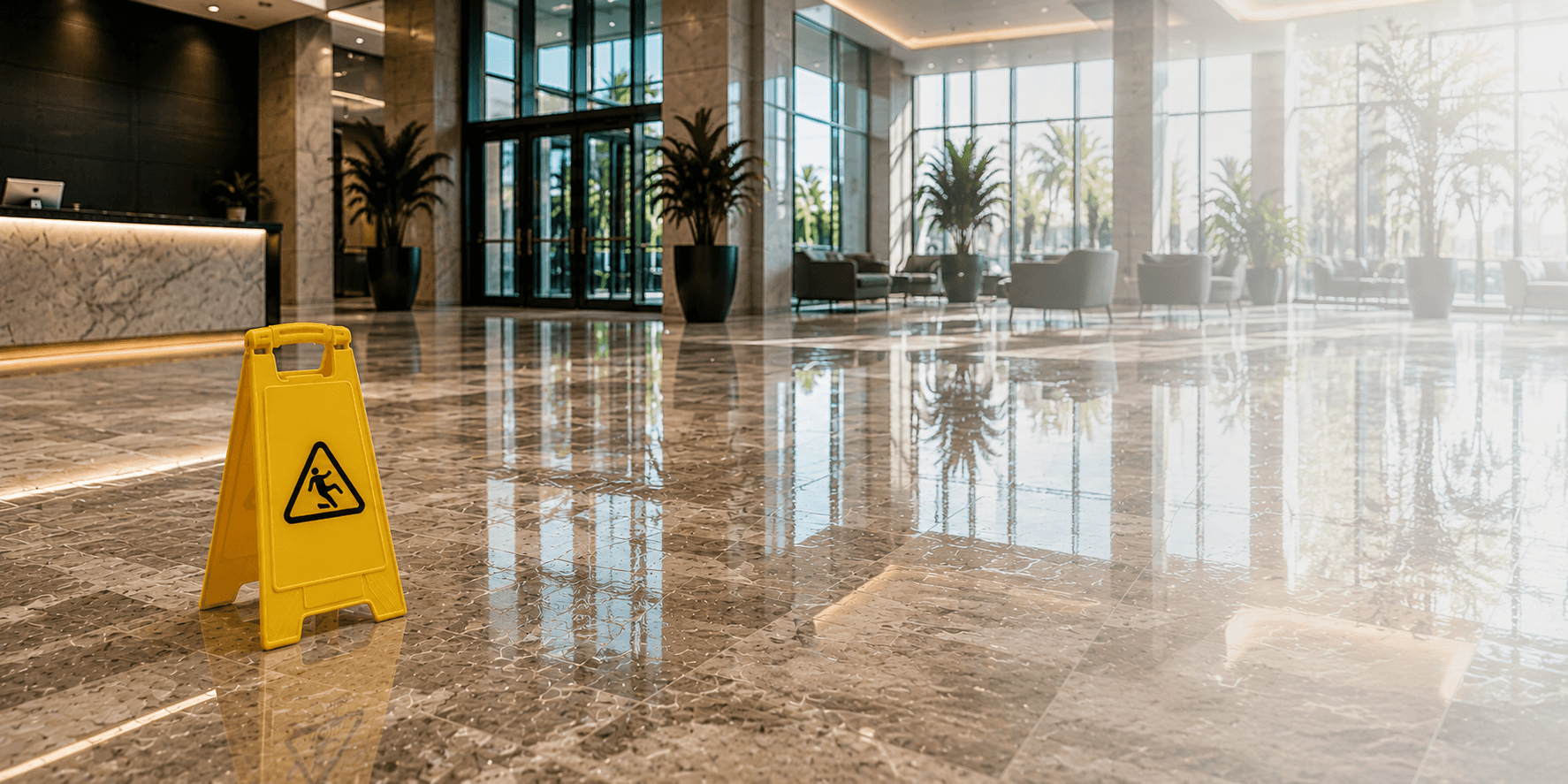
Traction is measurable.
Four steps to a documented DCOF reading.
This is a procedure, not an opinion. Same device, same standard, same sequence, every time.
Step 1
Pre-clean the surface.
Residue, film, and cleaning-product buildup all change a reading. We clean the test zones first so the number reflects the floor, not the last thing that was mopped onto it.
Step 2
Wet the surface to the standard.
ANSI A326.3 specifies a surfactant solution so the test simulates a realistic wet condition. Dry-floor readings tell you very little, because dry floors are rarely the problem.
Step 3
Run the BOT-3000E.
The robot travels a fixed path with a weighted boot under pressure, and we run each zone in both directions, up and down and left and right, per the standard.
Step 4
Deliver the report.
You get a plain-English DCOF report: what was tested, when, the readings by zone, and what we recommend. If a zone needs treatment, that recommendation is in the same document.
If the number is low, we can raise it.

If our first method doesn't solve it, we adjust methods until the expected result is achieved, within the realistic boundaries of the surface.
Recent San Diego commercial tests.
Surf Ranch DSRT, new-build polished concrete
Surf Ranch DSRT came to Pure Light™ before the doors opened, with fresh polished concrete and no traction record of any kind. We ran the BOT-3000E across the walking zones and documented a baseline, so the operator started day one with a dated reading on file instead of an assumption.
Bayfront, downtown pool area
Bayfront had a pool-area non-slip treatment that did not perform. We came back, adjusted the method, and retested. Twice. Every step is on paper, including the attempts that did not clear the bar, because that is the part most vendors leave out of the file.
Who commissions a slip test.

Building managers and facilities directors.
Restrooms, lobbies, and back-of-house. Usually triggered by an incident or a question from a carrier, and usually looking for a defensible answer rather than a reassurance.

Architects and specifiers.
New-build commissioning. More specifiers are asking for BOT-3000E testing on new builds before final approval, and specifiers would rather have the reading before the walkthrough than after it.

General contractors.
Pre-opening handoff. A documented DCOF reading is one more closed item in the owner package.

Hotel and hospitality operators.
Pool decks, spa areas, and tile lobbies, where slip-and-fall exposure is a standing insurance and liability conversation.
The Pure Light Standard™ on a floor safety job.
The Pure Light Standard™ is the same five components on every job we do. Here is what each one looks like when the job is a slip test.

That is the whole arc. Read more about how we work on The Standard page.
Retest when the floor changes.
Common questions from commercial buyers.
Our flooring installer already told us it is slip-resistant. Why test?
A product rating is measured in a lab, on a clean sample, before installation. Your floor is measured in place, with the finish it actually has, the sealer it actually has, and the cleaning routine it actually gets. The BOT-3000E tells you what the walking surface is doing now.
We have not had an incident. Do we need this now?
This is the least expensive time to do it. A baseline reading taken before anything happens is a dated record of the condition of your floors, and if a zone comes back low you get to decide about treatment on your own schedule rather than someone else's.
How disruptive is the test to our operation?
We coordinate low-disruption windows with your team, and can work off-peak or overnight when a space requires it.
What happens if our floor fails the test?
We scope RexPro treatment with a grit additive for the zones that need it, apply it, and run the BOT-3000E again so the improvement is documented rather than assumed. And if the first method does not solve it, we adjust methods until the expected result is achieved, within the realistic boundaries of the surface.
Do we get documentation we can hand to someone else?
Yes. You get a DCOF report with the test date, the zones tested, the readings, and our recommendation, in plain English. We cannot speak for what a particular carrier or plan reviewer requires, so tell us what they have asked for and we will scope the test to produce it.
Pairs well with.

Commercial Tile & Grout Cleaning and Sealing.
Clean, color-seal the grout, and lock it in with RexPro for a commercial restroom floor that stays clean and looks new for up to ten years.

Commercial Sealing.
Coatings and penetrating sealers for surfaces that need protection beyond traction. Often referred to as topical sealers.

Commercial Flame Retardant.
The other Cal Fire / OSFM registered service in the Maintain tier, for drapes, banners, and public-assembly textiles.
Looking after a home rather than a facility?
The standard you hire is the standard that shows up.
Most vendors will tell you a floor feels fine. We will tell you what it measures, in writing, and what we can do about it.