
Quartz is engineered. Quartzite is natural.

Quarts (engineered)
Man-made. Crushed stone bound together with resin, then finished at the factory. This page is about the engineered kind.

Quartzite (natural)
Quarried natural stone. Different hardness, different behavior, and a different restoration process.
We start by reading the surface.
Before we quote anything, we identify the material, look at the damage, and give you the realistic path forward.
measured
What we look for first
We start by identifying the surface, because quartz and quartzite are different materials with different restoration paths.
We inspect the damage before we quote, so we can tell you whether restoration is a realistic option.
If the surface is not a good candidate for restoration, we will say so before you spend on work that will not solve the problem.
When the work is in range, we use a multi-method approach within the realistic boundaries of the surface.
If your surface is on the left, we scope it. If it is on the right, we say so and walk you through what your real options are, including the ones we do not get paid for. And when a job is genuinely in range: If our first method doesn't solve it, we adjust methods until the expected result is achieved, within the realistic boundaries of the surface.
The areas that carry the day.
In commercial spaces, the same surfaces do the same quiet work every day: greeting guests, handling transactions, supporting staff, and taking the constant contact of a busy building. This block should show the everyday pressure points we inspect, without promising a specific repair outcome before the surface is seen.
Common inspection points
Reception counters and lobby desks
Bar tops, café counters, and service areas
Restroom and back-of-house counters
Exposed corners, edges, and transaction points
Not sure what you are looking at?
Quartz, quartzite, or granite? Fixable, or past the point? Download What's Killing Your Stone, our two-page diagnostic guide, and identify your surface and its damage before anyone gives you a number.
The Pure Light Standard™, on engineered stone.
Step 1
We identify the surface, free
A scoping visit with professional Stone ID kits. We confirm what the surface actually is and set expectations on the spot.
Step 2
Written scope, written estimate
One page, in plain language, with scope and timeline, sent promptly after the walkthrough. Built to be forwarded to whoever signs.
Step 3
Work scheduled around your operations
We coordinate low-disruption windows with your team, and can work off-peak or overnight when a space requires it.
Step 4
Multi-method, in writing
If our first method doesn't solve it, we adjust methods until the expected result is achieved, within the realistic boundaries of the surface.
Step 5
Walkthrough and care handoff
We walk the finished surface with you, then tell you which products to keep off it so the work holds.
Does engineered quartz need sealing?
The facilities that already hired the standard.



Cal Fire / OSFM registered · MB Stone Restoration · MORE™ AntiEtch™ Certified Applicator · Licensed and fully insured
700+ five-star Google reviews

" width="48px"/><path d="M 23.04 4.91 C 23.042 3.264 22.896 1.62 22.604 0 L 0 0 L 0 9.295 L 12.916 9.295 C 12.349 12.284 10.647 14.815 8.094 16.517 L 8.094 22.56 L 15.884 22.56 C 20.422 18.371 23.04 12.219 23.04 4.91 Z" fill="rgb(66, 133, 244)" height="22.56px" id="hEgMm5Vux" transform="translate(24 19.636)" width="23.04001243775513px"/><path d="M 21.425 19.418 C 27.905 19.418 33.338 17.28 37.309 13.614 L 29.519 7.571 C 27.381 9.011 24.654 9.884 21.425 9.884 C 15.185 9.884 9.883 5.672 7.985 0 L 0 0 L 0 6.196 C 3.949 14.029 12.043 19.418 21.425 19.418 Z" fill="rgb(52, 168, 83)" height="19.418px" id="lu_CTrY37" transform="translate(2.575 28.582)" width="37.309px"/><path d="M 10.56 15.316 C 10.061 13.847 9.803 12.307 9.796 10.756 C 9.796 9.163 10.08 7.636 10.56 6.196 L 10.56 0 L 2.575 0 C 0.881 3.332 -0.002 7.018 0 10.756 C 0 14.64 0.938 18.283 2.575 21.512 L 8.793 16.669 Z" fill="rgb(251, 188, 5)" height="21.512px" id="o9N41Q3sx" transform="translate(0 13.244)" width="10.560002771839168px"/><path d="M 21.425 9.556 C 24.96 9.556 28.101 10.778 30.61 13.135 L 37.483 6.262 C 33.316 2.378 27.905 0 21.425 0 C 12.043 0 3.949 5.39 0 13.244 L 7.985 19.44 C 9.883 13.767 15.185 9.556 21.425 9.556 Z" fill="rgb(234, 67, 53)" height="19.439999999999998px" id="wNlPBCzUS" transform="translate(2.575 0)" width="37.483px"/></g></svg>)


Stone expertise you can verify.
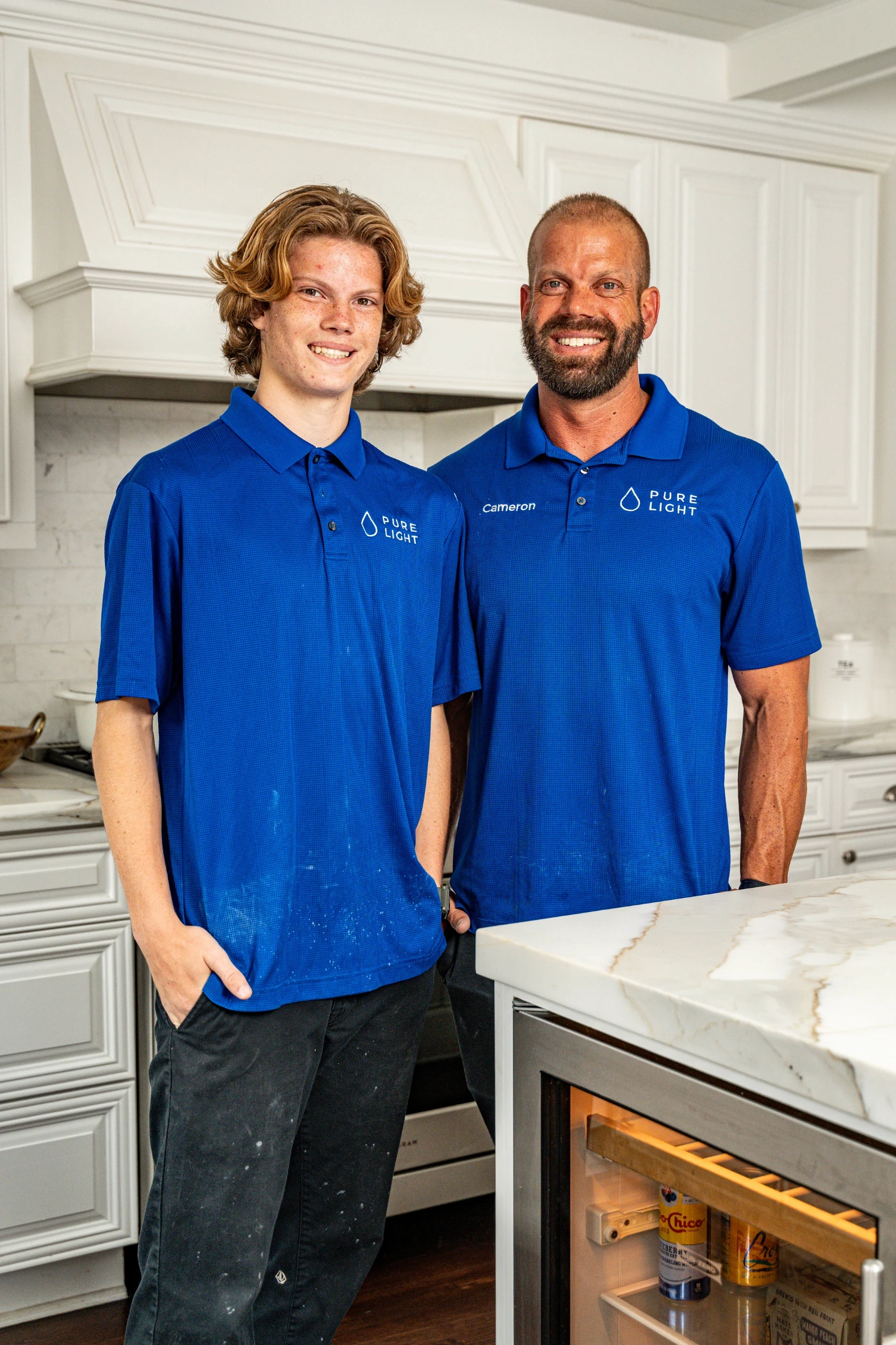
Every Pure Light™ technician is certified through Pure Stone Care. Cameron Stewart is the national trainer for MB Stone restoration west of the Mississippi. The training authority other operators travel for is the same authority that shows up at your facility.
Learn about
Commercial quartz restoration questions.
Is quartz the same as quartzite?
No. Quartz is engineered stone. Quartzite is natural stone. If you are not sure which surface you have, we identify it before recommending a restoration path.
Do you look at the surface before giving a scope?
If our first method doesn't solve it, we adjust methods until the expected result is achieved, within the realistic boundaries of the surface. Some deeply set damage on travertine cannot be fully reversed. We will tell you honestly when we have reached that limit, before the invoice.
How do you keep downtime low in an operating facility?
We coordinate low-disruption windows with your team, and can work off-peak or overnight when a space requires it.
What happens if the first method does not solve it?
If our first method doesn't solve it, we adjust methods until the expected result is achieved, within the realistic boundaries of the surface.
What documentation do we receive?
You receive a signed job summary with scope, surfaces serviced, and completion notes. Certificate of insurance is available on request.
Related commercial services.


Now let us look at the surface.
Request a scoped commercial estimate and we will tell you what your engineered stone can be restored to, and what it cannot. If our first method doesn't solve it, we adjust methods until the expected result is achieved, within the realistic boundaries of the surface.