
Quartz or quartzite? They are not the same surface.
Quartz (engineered)
Engineered, not natural.
Quartz countertops are manufactured. Ground stone bound with resin. The uniform look and consistent color you love are the same reason restoration on quartz has strict, honest limits.
Quartzite (natural)
Natural stone, quarried.
Quartzite is a natural stone pulled from the earth. It can be honed, polished, and restored much like marble or granite. If quartzite is what you actually have, the restoration menu is wider.
Not sure which you have? We identify your surface at the free estimate, using professional Stone ID kits.
What we can do on quartz. And what we will not pretend we can.
What we can help with
Dullness and light surface haze
Quartz can lose its factory glow from wear, mineral buildup, or the wrong cleaners. On many surfaces, we can bring the finish back.
Most staining
Coffee, wine, oil, dye. On engineered quartz, most stains that reach the resin can be treated and pulled back.
Visible seams
Seams that darkened over time, or that were poorly finished at install, can often be re-worked so they read clean again.
Light scratches
Fine surface scratches from utensils or grit can usually be buffed and blended into the surrounding finish.
What Can't Be Restored
Heat marks
Once resin is heat-damaged, the color and texture change is permanent. No restoration process brings it back. That is a replacement conversation.
Resin degradation
Cloudy patches, chemical damage, or delamination of the resin binder are structural. Restoration cannot fix engineering-level failure.
Structural cracks
A crack through a resin-bound engineered slab is not the same as a crack in natural stone. We do not pretend otherwise.
Full-color re-polish on solid-color quartz
Solid-color engineered slabs cannot be re-polished the way natural stone can. The finish is manufactured into the slab, not stone-deep.
If the first method does not solve it, we adjust.
Most engineered quartz does not need traditional penetrating sealing. If your install is one of the rare cases that benefits from a coating, we will say so at the estimate, and we will say so if it does not.
Not ready for an estimate? Take five minutes with the diagnostic guide.
Download What's Killing Your Stone, our diagnostic guide. Identify what is happening on your surface, by stone type, in about five minutes. No pressure to book.
How restoration actually runs on your quartz.
Step 1
In-home assessment
We identify the surface (Stone ID kit if there is any question), test a discreet area, and tell you honestly what we can and cannot achieve on your quartz. Free, no pressure to book.
Step 2
Craft
Depending on the damage, we hone light haze, buff dullness, address most stains, and refresh seams. All done on-site, with the surface in place.
Step 3
Care handoff
You leave the day with the products to use, the ones to avoid, and the heat-exposure limits that keep engineered quartz looking right.
Quartz care, from the team that restores it.
What to use
pH-neutral cleaners
Soft cloths and non-abrasive sponges
Cutting boards, always. Even a fine quartz-safe knife dulls the finish over time
Warm water and mild dish soap for daily cleanup
Special quartz sealer
What to avoid
Abrasive scrubbers and scouring pads
Bleach and ammonia-based cleaners
Harsh degreasers and oven cleaners
Direct heat from pans, curling irons, or hot cookware. Always use a trivet
The Pure Light Standard™, on every residential job.
Every Pure Light Cleaning™ visit runs the same way, whether we are polishing marble or working on your quartz.


Trusted in San Diego homes.



700+ five-star Google reviews
Common questions about quartz restoration.
Can you really restore engineered quartz? I have been told it cannot be polished.
On many quartz surfaces, we can improve dullness, address most stains, and refresh seams. On some, especially where heat or resin damage is involved, we cannot. We tell you which one you have at the estimate, before any work starts.
Do I need to seal my quartz counters?
Usually no. Engineered quartz is manufactured with built-in surface protection, so traditional penetrating sealers are typically not applied. If you have natural stone elsewhere in the home, we can walk through sealing on the same visit.
How is this different from what a fabricator or installer would do?
We are a restoration specialist, not a fabricator. If your surface needs full replacement or new fabrication, we tell you and step out of the way. If it can be improved, we are set up to do the craft work in your kitchen, without a full tear-out.
Not quartz? Or more than quartz?

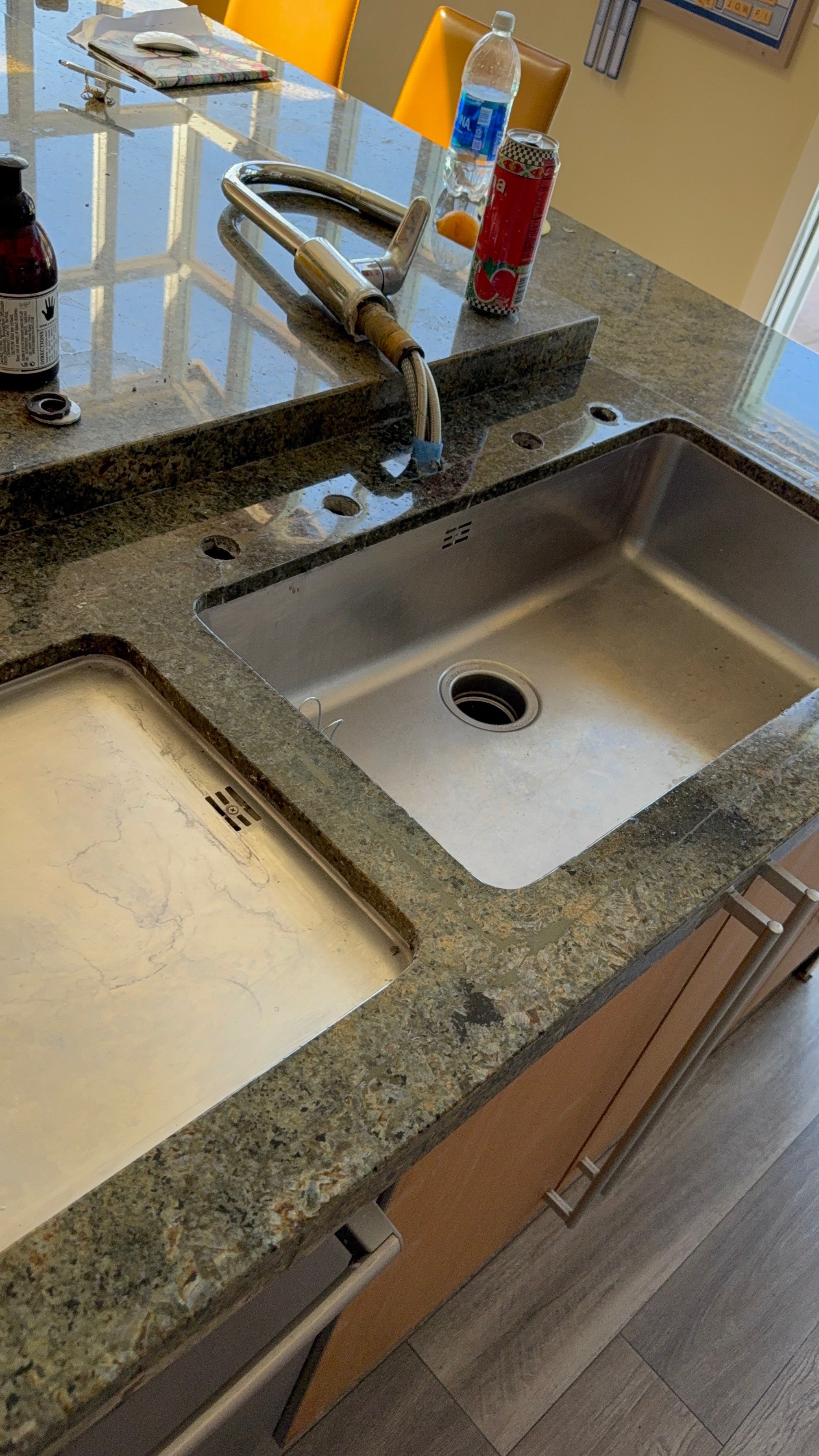

Your quartz surface either can be restored, or it cannot. The only way to know is to look.
No cost, no pressure. Just a real look at your surface and a straight answer.